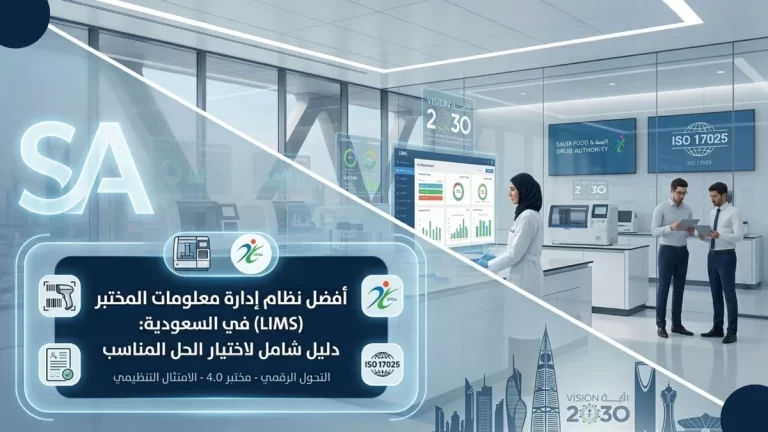
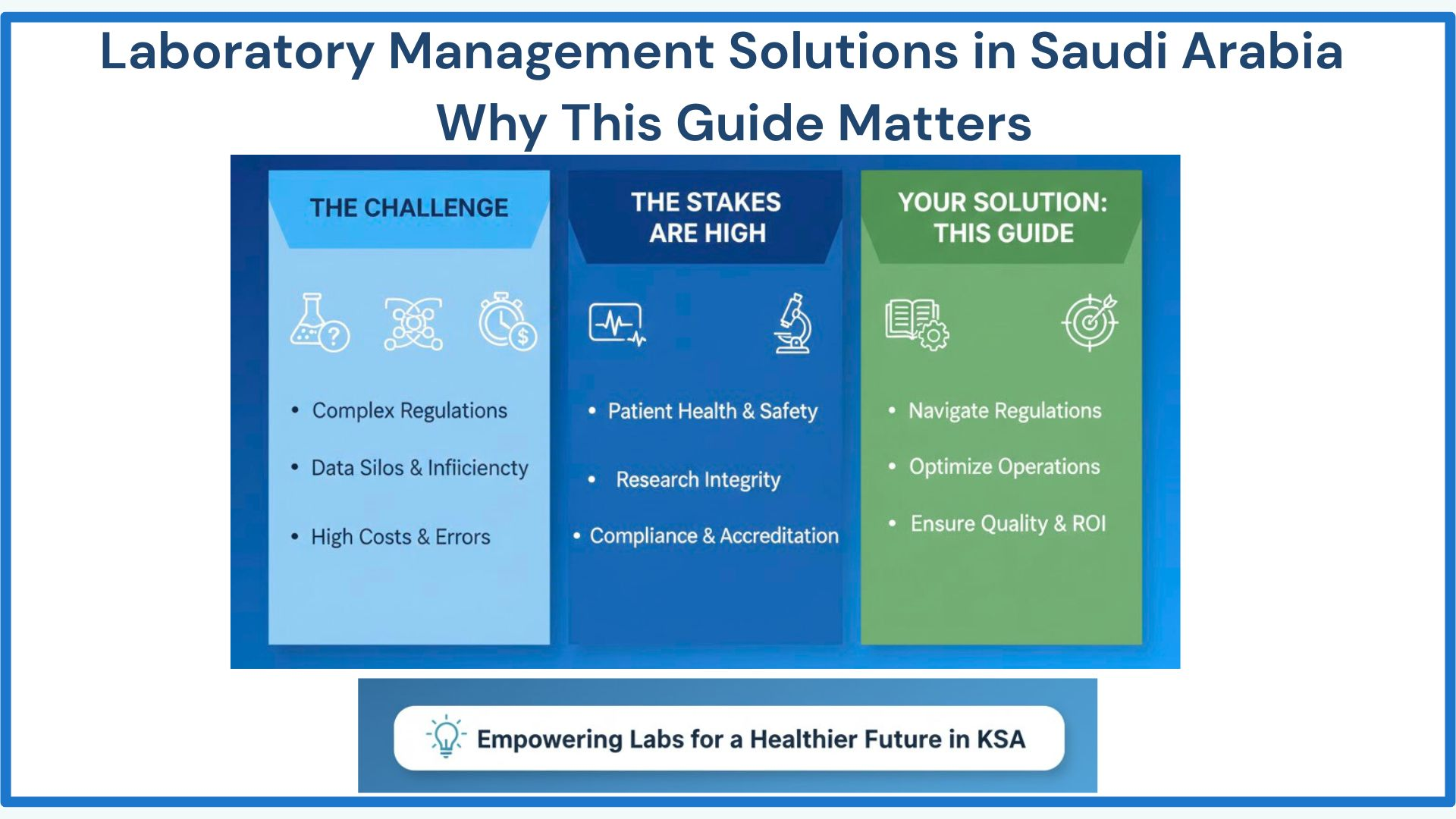
Saudi Arabia’s laboratory ecosystem is transforming rapidly across all sectors not only healthcare. Vision 2030 is accelerating digital transformation across petrochemical, industrial, environmental, academic and research, food safety, pharmaceutical & biotech, agricultural, manufacturing, calibration, forensic, Quality Testing (QC), and clinical laboratories. Modern labs require automation, traceability, and compliance-driven digital systems to meet operational, regulatory, and commercial demands. This guide provides an end‑to‑end framework for selecting, evaluating, and implementing a Saudi-developed Laboratory Information Management System (LIMS) across all industries.
πLiMS (pronounced PiLiMS) is proudly a Saudi-developed Laboratory Information Management System (LIMS), designed, patented, and trademarked in the Kingdom of Saudi Arabia, showcasing true innovation and technical advancement within the Kingdom. πLiMS is 100% owned by Laboratory Systems Establishment labsystems.sa, a Saudi-owned business.
As a homegrown innovation, πLiMS offers a robust and customizable digital solution for managing laboratory operations efficiently and securely. Laboratories can benefit greatly from adopting πLiMS, as it supports digital transformation, enhances data integrity, and improves compliance with national and international standards. By investing in locally developed technologies like πLiMS, Saudi enterprises contribute directly to the goals of Vision 2030 strengthening national innovation, reducing dependency on foreign software, and empowering the local tech ecosystem. Our solution (πLiMS) exemplifies the commitment to creating homegrown, high-impact technology that strengthens the digital transformation of Saudi Arabia.
- Why LIMS Matters for All Laboratory and Research Sectors in Saudi Arabia
- Laboratories and research organizations in Saudi Arabia face increasing operational, regulatory, and digital transformation pressures. The need for a modern Laboratory Information Management System (LIMS) has never been greater. Key challenges include:
- Sample tracking risks that cause delays and compliance issues
- Manual sample tracking increases the likelihood of misplaced samples, delayed reports, and regulatory non-compliance. Even small errors can escalate into audit findings or customer dissatisfaction.
- Manual workflows slowing productivity and increasing operational costs
- Paper-based forms, spreadsheets, and manual data entry reduce efficiency, extend turnaround times, and increase reliance on labor-intensive processes.
- Growing regulatory and quality requirements (SFDA, SASO, MoH, NCEC, ARAMCO, SABIC, accreditation bodies)
- Failed audits often stem from incomplete documentation, missing chain-of-custody records, inconsistent testing workflows, and lack of traceability.
- Demand for Arabic user interfaces, bilingual reporting, and Hijri date support
- Regulations and internal policies increasingly require Arabic-ready (RTL) systems, bilingual reports, and full Hijri–Gregorian date functionality.
- Compliance with the Personal Data Protection Law (PDPL)
- Labs handling personal or sensitive data must ensure secure data management, controlled access, encryption, and auditable traceability.
- Vision 2030 mandates for digital transformation, automation, and strengthening local content
- Organizations are expected to modernize laboratory operations, improve efficiency, and adopt systems that align with national digital transformation goals.
- Difficulty interfacing laboratory instruments and equipment
- Lack of instrument connectivity results in manual data entry, higher risk of transcription errors, and increased operational overhead.
- Challenges integrating with ERP, HIS, MoH platforms, MES, or external portals
- Disconnected systems create data silos, limit analytics, and hinder end-to-end traceability across production, research, and quality functions.
A modern, Saudi-ready LIMS delivers centralized workflow automation, full traceability, advanced analytics, and compliance with regulatory and quality standards across all sectors.
This guide is designed to help you address these challenges with clarity and structure. It will walk you through how to select the right Laboratory Information Management System (LIMS) for your organization.
By the end of this guide, you will clearly understand system capabilities, implementation timelines, market-specific considerations, budgeting factors, and vendor evaluation frameworks. Whether you are selecting a LIMS for the first time or replacing an outdated system, this roadmap provides the exact steps needed to make a confident, compliant, and future-ready decision.
Industry Coverage: LIMS Applications Across All Sectors
Petrochemical, Oil & Gas, and Energy Laboratories
- Supports ASTM/API methods
- Complex calculations and batch testing
- CoA generation
- Integration with GC, GC-MS, ICP-OES, XRF, HPLC
- Strict chain‑of‑custody
- Compliance with Aramco/SABIC standards
Industrial, Manufacturing & QC Laboratories
- Raw material, in‑process, and final product QA/QC
- Integration with production lines
- ISO 9001 & ISO 17025 alignment
- Real-time dashboards for plant-level visibility
Construction Materials & Geotechnical Labs
- Concrete, asphalt, soil, aggregate testing
- Project/site-based sample tracking
- Automated reporting for contractors & regulators
Environmental, Water & Desalination Labs
- Mobile sampling with GPS
- Automatic compliance reports (PME, NWC, Water Authority)
- Trend analysis for pollutants, salinity, turbidity, metals
Food Safety, Agriculture & Veterinary Labs
- Nutritional analysis, microbiology, pesticide residues
- Halal testing documentation
- SFDA & GCC compliance
Pharmaceutical & Biotechnology Labs
- GMP compliance
- Stability, batch, and R&D workflows
- Data integrity under ALCOA+ principles
Calibration & Metrology Labs
- Calibration certificates
- Instrument tracking
- Measurement uncertainty & traceability
- ISO 17025 alignment
Academic, Research & University Laboratories
- Multi-project and multi-disciplinary workflows
- Experiment-level customization
- Secure long-term research data archiving
Forensic, Security & Criminal Investigation Labs
- Evidence chain‑of‑custody
- Restricted access controls
- Tamper-proof audit trails
- Multi-agency reporting
Clinical & Medical Laboratories (MOH + Private Sector)
- HL7, HIS, SEHA integration
- CBAHI compliance
- Routine and specialized testing workflows
- Bi‑lingual reporting
Core Capabilities of Modern LIMS
1. Sample Tracking & Chain of Custody
A world-class LIMS records every movement of a sample from collection to disposal with 100% traceability.
- Barcode/QR system for error-free identification
- Automatic workflow routing
- Real-time tracking for multi-department laboratories
This ensures compliance with regulatory and Quality requirements such as CBAHI, ISO 17025, MOH, SFDA, and SASO.
2. Instrument Integration & Automation
Saudi labs increasingly rely on complex instruments (hematology, chemistry analyzers, GC/MS, HPLC, ICP-OES). A modern LIMS must:
- Automatically capture results
- Eliminate manual entry
- Support ASTM, HL7, and custom drivers
This reduces human error and boosts throughput critical for high-volume labs like Aramco contractors, MOH hospitals, and environmental monitoring units.
3. Quality Control & Compliance Management
Regulators now expect digital systems for:
- QC/QA tracking
- Corrective actions and preventive actions (CAPA)
- Document control
- Equipment calibration and maintenance logs
- Proficiency testing workflows
A modern LIMS acts as your compliance engine, ensuring you meet KSA’s evolving standards.
4. Reporting & Analytics
Advanced dashboards highlight:
- Turnaround time (TAT)
- Technician workload
- Reagents & inventory levels
- Audit trails and non-conformities
Reports can be issued in Arabic or English, exported as PDF/Excel, or automatically shared with other portals.
5. Arabic Language & Hijri Calendar Support
Saudi Arabia requires systems that support:
- Full Arabic UI
- Bi-lingual reporting
- Hijri ↔ Gregorian date synchronization
This is non-negotiable for government and healthcare labs.
Cloud vs On-Premise Options for Saudi Arabia
|
Deployment |
Best For |
Pros |
Cons |
|
Cloud |
Private labs, research institutes |
Fast deployment, low upfront cost, scalable |
Requires stable internet, PDPL-compliant hosting |
|
On-Premise |
Hospitals, petrochemical, government labs |
Full data control, offline reliability |
Higher initial cost, longer setup |
Saudi organizations increasingly prefer hybrid deployments, keeping sensitive data onsite while using cloud modules for analytics.
Integration Requirements (KSA-Specific)
A Saudi-ready LIMS must support integration with:
- HIS / EMR systems (HL7)
- Insurance & billing systems
- MOH platforms such as Seha
- Customers reporting portals (such as Aramco/SABIC)
- Environmental & water quality data platforms
Smooth integration eliminates duplicate work and accelerates reporting.
Industry Applications in Saudi Arabia
Laboratory management needs vary widely across Saudi Arabia’s major sectors. A modern LIMS must be flexible enough to handle clinical workflows, petrochemical testing, environmental sampling, food analysis, and research operations each with its own regulatory and technical requirements. Below is a sector-wise breakdown of how Laboratory Management Systems are used across the Kingdom.
Healthcare & Clinical Labs (MOH + Private Sector)
Saudi Arabia’s healthcare sector is rapidly expanding, with MOH hospitals, private diagnostics chains, and specialty centers all transitioning toward digital-first laboratory operations. A healthcare-ready LIMS supports:
- Patient registration, HL7 integration, and Seha portal connectivity
- Automated workflows for hematology, chemistry, microbiology, immunology, and molecularlabs
- CBAHI-aligned quality management(QC/QA, document control, traceability)
- Bi-lingual reporting for physicians and patients (Arabic/English)
- Real-time tracking of TAT, STAT orders, and technician workloads
For growing private chains in Riyadh, Jeddah, Dammam, and Makkah, the right LIMS drastically reduces operational costs and improves accuracy during high-volume testing seasons such as Hajj and Umrah.
Petrochemical & Industrial Laboratories
Saudi Arabia’s petrochemical sector led by Aramco, SABIC, SEC, Ma’aden, and hundreds of contracting labs requires robust analytical workflows with extremely strict validation rules. A suitable industrial LIMS must support:
- ASTM/API/ISO-based methods, complex calculations, and automated result validation
- Integration with instruments such as GC, GC-MS, HPLC, ICP-OES, XRF
- Generation of Certificates of Analysis (CoA)with customer-specific templates
- Batch testing, specification management, and release workflows
- Secure access control for high-risk industrial environments
These labs handle petroleum products, lubricants, polymers, metals, catalysts, drilling fluids, and wastewater. Precision and chain-of-custody integrity are crucial for avoiding operational shutdowns.
Environmental, Water & Desalination Laboratories
From national water treatment plants to municipal monitoring stations, Saudi Arabia maintains one of the largest environmental testing networks in the region.
A suitable LIMS helps with:
- Field sampling using mobile apps
- Location-based tracking for wells, reservoirs, distribution networks
- Compliance with PME standards
- Automated workflows for microbiological, chemical, and physical testing
- Integration with desalination plant SCADA data
- Trend analysis for pollution, salinity, turbidity, and heavy metals
Environmental labs often manage thousands of samples monthly; automation is essential for timely reporting and regulatory submissions.
Food Safety, Halal Testing, Academia & Research
Saudi universities (KAUST, KSU, KFUPM) and food safety labs require highly flexible systems. A modern LIMS must support:
Food & Halal Testing
- Compliance with SFDAand GCC requirements
- Shelf-life studies, nutrition testing, microbiology workflows
- Halal compliance documentation and digital certification
Academic & Research Labs
- Flexible test creation for experimental workflows
- Project- and grant-based sample management
- Collaboration tools for multi-department research teams
- Secure data capture for molecular biology, genomics, materials science, and engineering labs
Universities often run hybrid environments of routine testing plus advanced research so the LIMS must handle structured and unstructured data.
Compliance & Regulatory Requirements
Compliance is one of the strongest drivers for adopting Laboratory Management Systems in Saudi Arabia. Whether your lab serves healthcare, petrochemical, environmental, or research sectors, regulators expect digital traceability, audit readiness, and complete documentation. A modern LIMS becomes the core engine for meeting these national and international standards.
- ISO 17025 for testing & calibration labs
- ISO 15189 for medical laboratories
- MOH, SFDA, PME regulatory alignment
- Aramco/SABIC digital lab standards
- PDPL data protection
- ALCOA+ data integrity
A LIMS ensures full audit-readiness, traceability, and automated record-keeping.
ISO 17025 Implementation
ISO 17025 is mandatory for most testing and calibration laboratories in Saudi Arabia, especially those working with Aramco, SABIC, PME, SFDA, and municipal authorities.
A compliant LIMS supports:
- Documented methods, SOPs, workflows, and uncertainty calculations
- Digital proficiency testing (PT) and inter-lab comparison records
- Instrument calibration, maintenance logs, and alerts
- Personnel competency records (training, evaluations)
- Complete audit trails and chain-of-custody documentation
- Non-conformance & CAPA management
With automation, labs avoid the common cause of audit failure: missing or incomplete records.
CBAHI Accreditation Support (Healthcare)
For hospitals and diagnostic centers, CBAHI demands strict control over:
- Patient identification
- Sample collection and traceability
- QC/QA processes
- Result validation
- Turnaround time metrics
- Incident reporting and corrective actions
A healthcare-ready LIMS aligns testing workflows with CBAHI’s updated digital standards, enabling faster accreditation cycles.
MOH & SFDA Mandates
Saudi Arabia’s Ministry of Health and the Saudi Food & Drug Authority require structured, accurate, and traceable laboratory data. Requirements include:
- Secure, validated digital systems
- Support for Arabic reports
- Integration with SEHA, EHR/HIS platforms, and external portals
- Validation of methods and workflows
- Data integrity under ALCOA+ principles
- A LIMS ensures consistent compliance across all departments and testing units.
PDPL (Saudi Personal Data Protection Law)
All laboratories handling patient or customer data must comply with PDPL.
A compliant LIMS provides:
- Role-based access control
- Secure user authentication
- Data residency options
- Encrypted storage and transmission
- Log retention and deletion policies
This is especially critical for cloud-based deployments and multi-branch diagnostic networks.
Audit Trails & System Validation (IQ/OQ/PQ)
Regulators expect electronic systems to be validated.
A LIMS enables:
- Installation Qualification (IQ)
- Operational Qualification (OQ)
- Performance Qualification (PQ)
- Full audit trail of all user and system actions
These builds trust in test results and supports both internal and external audits.
Selection Framework
Choosing the right Laboratory Management System (LIMS/LMS) in Saudi Arabia is a strategic decision that impacts operational efficiency, compliance, budget, integration capability, and long-term scalability. This section gives you a complete, Saudi-specific selection framework that removes guesswork and helps you make a confident and defensible purchase decision.
Requirements Gathering Checklist
Start by understanding your internal needs. Every lab should follow a structured discovery process that includes:
1. Operational Requirements
- Sample volume per day
- Number of departments (chemistry, micro, molecular, petrochemical, etc.)
- Required workflows (routine vs. complex testing)
- QC/QA needs
- Mobile sampling (environmental, water, or food labs)
2. Technical Requirements
- Instrument types and integration needs
- HIS/ERP billing integration
- HL7/ASTM drivers
- Cloud, on-premise, or hybrid deployment
- Data residency constraints under PDPL
3. Regulatory Requirements
- ISO 17025, CBAHI, SFDA, SASO, MOH, or NCEC compliance
- Arabic reporting
- Audit trail availability
- Method validation support
4. User & Training Requirements
- Arabic interface
- Role-based permissions
- Multi-location scalability
- Training, onboarding, and post-go-live support
Completing this checklist ensures your procurement process is aligned with Vision 2030 digital standards.
Vendor Evaluation Criteria – The 6 Key Factors
When assessing LIMS vendors in Saudi Arabia, measure each candidate against these six critical criteria:
1. Local Market Experience
Has the vendor deployed LIMS in Saudi Arabia before?
Do they understand CBAHI, SFDA, PDPL, and Arabic/Hijri requirements?
2. Regulatory Alignment
Does the system support ISO 17025 workflows, audit trails, QC management, and compliant record-keeping?
3. Integration Capability
Can they integrate with:
- Laboratory instruments
- SEHA / HIS / ERP systems
- Petrochemical testing instruments
- Environmental monitoring platforms
- Aramco/SABIC portals
4. Scalability & Performance
Will the system support additional branches, instruments, and testing units as the business grows?
5. Support, Training & Local Presence
Does the company offer in-country support, Arabic training, and fast ticket resolution?
6. Total Cost of Ownership (TCO)
Upfront license + implementation + customization + annual costs must be evaluated together.
A vendor who scores high in all six areas is more likely to deliver a stable, long-lasting implementation.
RFP Best Practices for the Saudi Market
A strong RFP (Request for Proposal) ensures you do not miss critical requirements. Follow these steps:
- Define mandatory compliance needs(ISO, PDPL, CBAHI, Arabic language).
- Request detailed workflow mappingbefore pricing.
- Insist on real demosusing your own sample workflows.
- Ask for referencesfrom KSA hospitals, industries, or environmental labs.
- Request a clear implementation planwith timelines, milestones, and responsibilities.
- Demand a data migration strategyif you are replacing an old system.
- Require transparent pricing—no hidden modules, add-ons, or integration fees.
This avoids 90% of the problems seen in failed LIMS projects.
Red Flags to Watch For
Avoid vendors who:
- Have no Saudi clients or experience with Arabic workflows
- Provide generic demos instead of real test scenarios
- Cannot integrate with your key instruments
- Offer only cloud hosting without PDPL guarantees
- Hesitate to provide references or SLAs
- Push “one-size-fits-all” templates for all industries
- Avoid discussing customization or long-term scalability
These warning signs typically lead to cost overruns, failed audits, and project delays.
TCO Calculation – 5-Year Cost Breakdown Example
When evaluating solutions, calculate the true 5-year Total Cost of Ownership (TCO):
- Software license / subscription
- Implementation services
- Instrument integrations
- Hosting infrastructure (cloud/on-prem)
- Customization & workflow automation
- Training for Arabic-speaking staff
- Annual support & maintenance
- Additional modules(QC, halal testing, environmental workflows, etc.)
- Expansion costsfor branches or high-throughput testing
Most Saudi labs underestimate integration and customization costs your RFP should force vendors to provide fixed quotations.
Comparison Table – Solution Types
|
Type |
Best For |
Strengths |
Weaknesses |
|
Enterprise LIMS |
Aramco, SABIC, MOH hospitals |
Extremely powerful, scalable |
High cost, long implementation |
|
Mid-Market LIMS |
Large private labs, industrial sites |
Balanced cost & functionality |
May require custom workflows |
|
Cloud-Native LIMS |
Clinics, multi-branch diagnostics |
Fast setup, low cost, remote access |
PDPL concerns, limited heavy automation |
|
Open-Source LIMS |
Universities, research groups |
Flexible, customizable |
Requires strong IT team, limited support |
This comparison helps decision makers choose a category aligned with their needs and budget.
Implementation Roadmap
Successfully implementing a Laboratory Management System (LIMS) in Saudi Arabia requires careful planning, phased execution, and change management, especially for Arabic-speaking teams. A well-structured roadmap ensures timely go-live, smooth adoption, and regulatory compliance.
Realistic Timelines
LIMS implementation timelines vary depending on lab size, complexity, and integration requirements:
|
Lab Size |
Timeline (Months) |
|
Small (≤5 instruments, single location) |
3–4 |
|
Medium (10–20 instruments, multi-department) |
6–8 |
|
Large (≥50 instruments, multi-site, petrochemical/industrial) |
12–18 |
These estimates include planning, configuration, testing, training, and go-live phases.
Phase Implementation Approach
1. Planning Phase
- Conduct requirements validationwith all stakeholders
- Map existing workflows to proposed LIMS processes
- Identify integration points: HIS, ERP, instruments, MOH portals
- Develop project charter, timelines, and responsibilities
- Conduct risk assessment (data migration, compliance, resource constraints)
2. Configuration Phase
- Install software (cloud/on-premise)
- Configure user roles, permissions, and Arabic language support
- Set up instrument integration and automated workflows
- Build QC/QA modules, audit trails, and regulatory checklists
- Customize reports, dashboards, and CoA templates
3. Testing Phase
- Conduct Unit Testing(individual modules & instruments)
- Perform System Integration Testingacross all workflows
- Validate Arabic reports, Hijri calendar, and PDPL compliance
- Conduct User Acceptance Testing (UAT)with lab staff
- Review non-conformance logsand correct any gaps
4. Go-Live Phase
- Execute data migrationfrom legacy systems
- Deploy system across departments/locations
- Provide on-site and remote trainingfor staff
- Monitor initial performance, TAT, and workflow adoption
- Establish support channelsfor ongoing issue resolution
Critical Success Factors for Saudi Implementations
- Executive sponsorship:Leadership must endorse the project
- Stakeholder engagement:Include technicians, lab managers, IT staff
- Arabic language readiness:All interfaces, reports, and training materials must support Arabic fully
- Regulatory alignment:Validate workflows against ISO 17025, CBAHI, MOH, and SFDA
- Change management:Communicate benefits, conduct hands-on training, and set KPIs
Common Mistakes and How to Avoid Them
- Skipping workflow analysis:Leads to process misalignment
- Underestimating training needs:Reduces adoption and accuracy
- Ignoring instrument integration challenges:Causes delays in result capture
- Neglecting PDPL compliance:May trigger legal penalties
- Rushing go-live:Can overwhelm staff and compromise quality
Change Management for Arabic-Speaking Teams
- Conduct bilingual training sessions
- Provide user manuals in Arabic and English
- Establish super-user championswithin each department
- Monitor adoption via dashboards and daily metrics
- Gather feedback weekly and adjust workflows as needed
ROI & Business Case
Investing in a Laboratory Management System (LIMS) in Saudi Arabia is not just about compliance, it’s a strategic move to improve efficiency, reduce errors, and maximize profitability. This section outlines the ROI and business case for labs of all sizes.
Cost Breakdown Examples (Small/Medium/Large Labs)
|
Lab Size |
Initial Cost |
Annual Maintenance |
Integration & Training |
5-Year TCO |
|
Small (1–5 instruments) |
$35,000 |
$7,000 |
$7,500 |
$62,500 |
|
Medium (10–20 instruments) |
$75,000 |
$15,000 |
$20,000 |
$170,000 |
|
Large (50+ instruments, multi-site) |
$250,000 |
$50,000 |
$75,000 |
$625,000 |
These costs include licensing, implementation, instrument integration, Arabic language support, and training.
Quantifiable Benefits
- Labor Efficiency Gains (20–40%)
- Automated sample tracking, reporting, and workflow routing reduces manual effort.
- Technicians spend less time on data entry, freeing staff for value-added tasks.
- Error Reduction Savings
- Fewer sample mix-ups, mislabeled tests, or lost results prevent costly retests.
- Reduced compliance penalties from failed audits.
- Revenue Capture Improvements
- Faster TAT increases patient throughput in clinical labs.
- Industrial labs can issue accurate CoAs faster, improving client satisfaction.
- Compliance Cost Avoidance
- ISO 17025, CBAHI, and SFDA-aligned processes reduce the risk of fines, delayed certifications, and lost contracts.
Example:
A medium-sized hospital in Jeddah implemented a LIMS over 18 months and achieved:
- 18-month payback period
- 25% reduction in staff overtime
- 30% faster reporting
- Significant compliance cost avoidance
Interactive Element
Embed an ROI Calculator that allows decision-makers to input:
- Lab size
- Current labor costs
- Average TAT
- Expected error rates
- Investment budget
The calculator provides estimated payback period, efficiency gains, and cost savings, making the business case tangible for executives.
Getting Started: Action Plan
Embarking on a Laboratory Management System (LIMS) implementation in Saudi Arabia requires a practical, step-by-step action plan. The first 90 days are crucial to ensure alignment, engagement, and measurable progress.
90-Day Quick-Start Roadmap
Phase 1: Assessment & Planning (Weeks 1–4)
- Conduct a gap analysisof current workflows and compliance readiness.
- Map existing instruments, HIS, ERP, and reporting systems.
- Assign project leads and super-usersfrom each department.
- Define KPIs and success metrics(TAT, error reduction, audit readiness).
Phase 2: Vendor Engagement & Selection (Weeks 5–8)
- Shortlist vendors using RFP template and evaluation criteria.
- Schedule live demos with real workflows.
- Verify Arabic language support, compliance features, and integration capabilities.
- Finalize contract, implementation plan, and project timeline.
Phase 3: Initial Configuration & Pilot (Weeks 9–12)
- Configure LIMS modules for sample tracking, QC, instrument integration, and reporting.
- Conduct pilot testing with selected workflows.
- Train staff in Arabic and English, focusing on real tasks.
- Gather feedback and refine configurations.
Resources
- Industry Associations:Saudi Society for Clinical Laboratory Sciences, Saudi Society for Laboratory Medicine
- Consultants & Advisors:Specialized LIMS implementation partners in KSA
- Conferences & Workshops: Saudi Lab Expo, HealthTech KSA, and regional ISO workshops
Next Steps Checklist
- Complete initial lab assessment
- Select vendor and finalize contract
- Conduct staff training and pilot testing
- Implement full rollout plan after pilot evaluation
Following this structured 90-day plan ensures that your lab is prepared for a smooth LIMS implementation while staying compliant with Vision 2030 mandates and Saudi regulatory standards.
1. How much does a LIMS actually cost?
Costs depend on lab size, modules, deployment type, and integration needs. Small labs may spend $25k–$75k, while large multi-site labs can exceed $250k over five years. TCO includes licensing, implementation, training, and annual support.
2. How long does implementation take?
Small labs: 3–6 months
Medium labs: 6–12 months
Large labs: 12–18 months
This includes planning, configuration, testing, and go-live.
3. Do we need Arabic language support?
Yes. Arabic support and bi-lingual reporting are critical for MOH, CBAHI, and SFDA compliance.
4. Should we choose cloud or on-premise?
Depends on data sensitivity, budget, and internet stability. Hybrid deployments are common in Saudi Arabia.
5. What if our instruments are old or non-standard?
Modern LIMS supports instrument drivers, middleware, or manual entry. Vendor evaluation should confirm compatibility.
6. Does a LIMS help with ISO 17025 compliance?
Absolutely. It provides audit trails, QC workflows, instrument calibration logs, and CAPA tracking.
7. Can LIMS integrate with MOH / SEHA portals?
Yes. Integration is essential for reporting patient results and regulatory compliance.
8. How does LIMS improve efficiency?
Automates sample tracking, reporting, QC, and instrument data capture, reducing manual labor by 20–40%.
9. Can we manage multiple locations with one LIMS?
Yes, enterprise and cloud solutions support multi-site labs with centralized dashboards.
10. Are there industry-specific modules?
Yes. Modules exist for healthcare, petrochemical, environmental, food safety, and academic research labs.
11. What training is required?
Arabic and English training sessions, hands-on workshops, and super-user programs ensure smooth adoption.
12. How do we handle data security and PDPL compliance?
Role-based access, encryption, secure hosting, and audit logs ensure compliance.
13. Can we customize workflows?
Yes. LIMS should support custom workflows for unique testing procedures or internal SOPs.
14. What happens after implementation?
Ongoing support, maintenance, upgrades, and continuous monitoring are crucial to sustain efficiency and compliance.
15. How do we calculate ROI?
Use labor cost savings, error reduction, compliance cost avoidance, and faster reporting metrics. An embedded ROI calculator can project payback periods and efficiency gains.
Conclusion
Implementing a Laboratory Management System (LIMS) in Saudi Arabia is no longer optional it is essential for Vision 2030 compliance, operational efficiency, and competitive advantage. From healthcare and petrochemical labs to environmental monitoring and academic research, modern labs require digital workflows, robust reporting, and regulatory-ready systems.
This guide has covered:
- Core LIMS capabilities, including sample tracking, instrument integration, QC, and Arabic support
- Industry-specific applications for healthcare, petrochemical, environmental, and food/research labs
- Regulatory compliance requirements: ISO 17025, CBAHI, MOH, SFDA, and PDPL
- A structured vendor selection framework, RFP best practices, and TCO calculations
- Implementation roadmap with planning, configuration, testing, and go-livephases
- ROI and business case considerations to justify your investment
- Actionable next steps and quick-start checklist
The message is clear: delaying digital transformation increases risk, operational inefficiency, and regulatory exposure. Taking action now positions your lab as a market leader and ensures long-term sustainability.